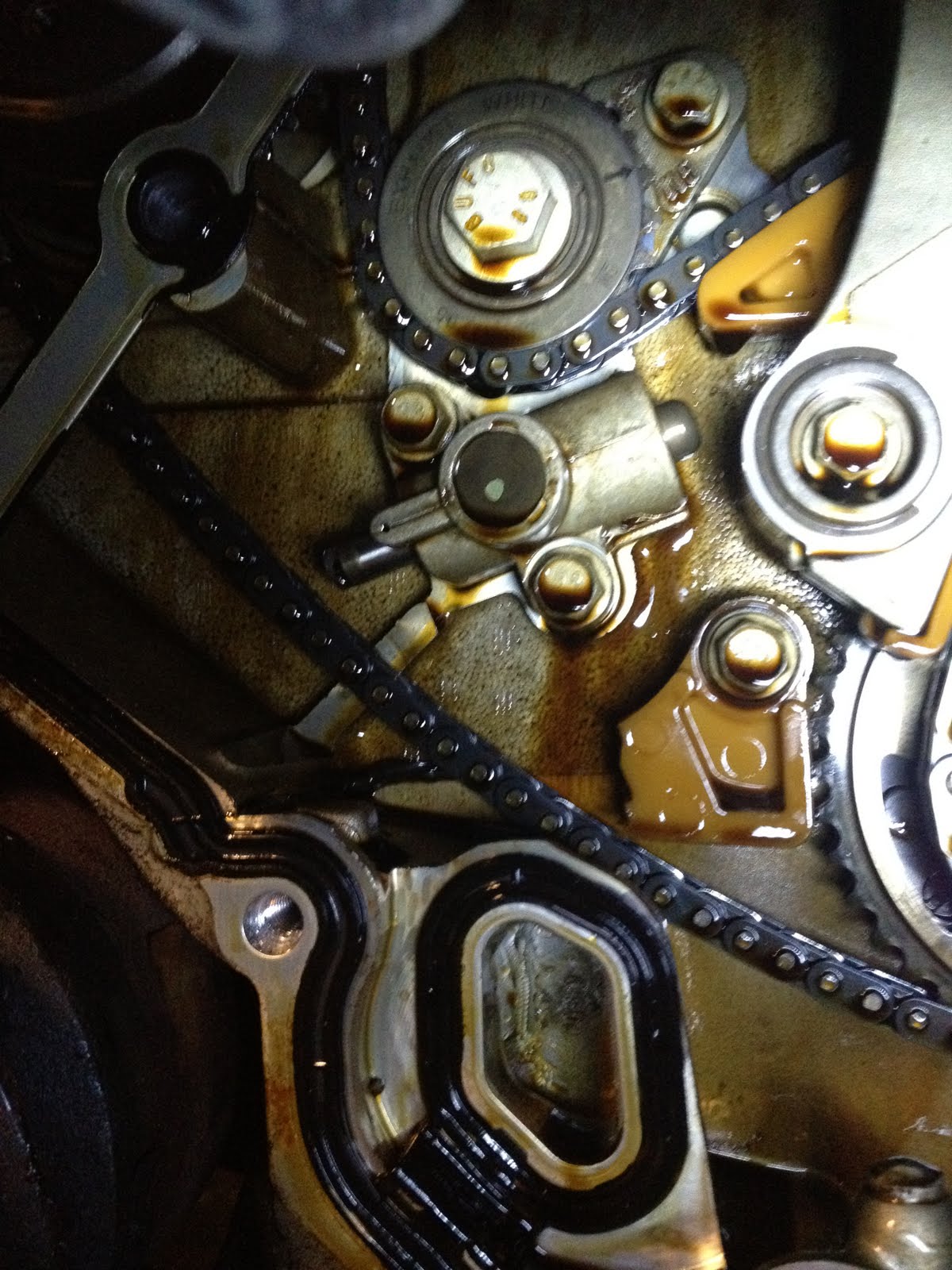
Sorry I haven't been writing as of late... life has been consumed by training for the road cycling season ahead and work. Not the interesting kind of work to tell you about and take pretty pictures of, the boring service kind of work. The turbo business has been doing very well though.
Take care, and I'll get back to this very soon.
-Chad
Friday, January 16, 2009
Friday, November 21, 2008
Mechanic etiquette: a rant of sorts?
Before I even start let me say that these are two words that are rarely used together.
To me, there's a certain etiquette that someone who is working on your vehicle should possess. Vehicles are individuals property which are easy to become attached to, most people care about their vehicle, its condition, and the image it projects about them as a person. I'm personally not so concerned with the image factor, but I'm definitely one who is attached to his vehicle. Along with this attachment comes a certain amount of pride I take in the cleanliness, upkeep, and overall maintenance of it. I know my car down to every single nut and bolt. I have everything exactly how I like it and I know the flaws and what needs to be done to correct them. If a setting or adjustment is slightly off from the last time I drove the vehicle, it does not take me long to notice.
Long story short: I don't like people touching my car.
Now, the personal amount of pride in my vehicle is something I keep in my mind when I'm working on a clients car. Little things, like getting greasy fingerprints on a wheel while remounting it, noting the initial adjustment of the drivers seat and mirrors before adjusting and driving it, ignoring any personal items someone may have in the car, absolutely everything down to the radio station the car was on when I picked it up are things that should be noted and set to their owners preferred settings upon returning a car. As a mechanic, you must also realize that when driving or road testing a car during repair, you are in a huge situation of liability if something were to happen with the car. Therefore, it is of the utmost importance to drive responsibly and respectfully, taking more than necessary due caution, when road testing.
I'm writing this because I recently had a very (read: VERY) bad experience at a local tire shop. As all us lovely nor'easterns know winter is in full gear, and with that comes snow tire season. As mechanically inclined and capable as I am, I simply don't have the equipment and machinery to mount, dismount, and balance tires. Therefore, to get the snow tires mounted on my car, I had to take it to...gulp...a shop.
So, I head out to a local generic tire center with the snow's in the trunk hoping for the best. I pull into a local shop that has a pretty decent reputation from what I've heard, so at this point I'm feeling moderately confident that my simple request of dismounting and mounting new tires will be a simple enough task for them to tackle.
...or not?
I'm greeted when I work in by a rather portly fellow perched on a stool behind a desk. I can't seem to ignore the lovely faces on the three other people waiting in the office/lobby/where they keep the magazines, looking like they were in the ER waiting to hear the news about their ill grandmother. The man behind the counter is on his personal cell phone talking to his wife... which he promptly continued as he totally ignored me standing in front of him. Eventually, he finally informed her that he had 'a guy come in' and has to go. We have a brief exchange and I tell him what I would like done, so he takes my information, keys, and I'm off to join the waiting crowd.
This shop has 6 bays with lifts and from what I counted 5 mechanics on duty. Not bad, not bad. So I sit for about a half hour and play some ferocious solitaire on my cell phone (if the luck I was having at solitaire that day was any reflection of how bad the service at that garage was going to be, I would have just got up and left). All this time, nobody even looks at my car. I can see into the bays and see mechanics doodling about not really doing much. I'm semi irritated at this point, but continue the wait. Finally, about 45 minutes a man finally starts walking to my car with keys. He sits down in my car and starts it, and sits there in it running for about two minutes. I see him fooling with the gear lever, and immediately realize he doesn't know how to put the car in reverse.
As fellow manual transmission Saab owners know, the reverse lockout must be bypassed by lifting the collar under the shift knob before the car will go into gear.
The man is literally trying to force the car into reverse! I run out there and grab open the passenger door quickly and give him a look, quickly accompanied by "Having problems?" I guess I was too late... he broke the shifter. The lock ring that holds the pivot ball at the base of the shifter into place has never been that strong on the car, but this guy completely trashed it. Needless to say, I'm angry.
The car goes into the garage for the tires and I return to my seat in the death lounge. I'm fairly irritated by this point, and it only got worse when the mechanics in the bay began blasting some form of heavy metal music that I would not even judge fit for human consumption. I'm not bagging anyone's music tastes, and to each their own, but when you're working in what should be a semi professional environment, this stuff doesn't really have a place. One woman even walked out of the waiting area because she could not stand it any longer. We're not talking like Metallica or any other kind of heavy music, we're talking something 3x faster and 3x more obnoxious. Anyway, to me it just upped the annoyance level.
So the car is ready go come out of the shop when I just hear the engine revving highly and the blow off valve repeatedly opening. I immediately gave the portly shop man the most murderous look I think I could form, and yelled "SERIOUSLY, IS THAT REALLY NECESSARY?" He runs to fetch the tattooed redneck that was revving the car and gets him to stop. Wow, safe to say... I'm pissed. I guess he saw the gauges and 3" exhaust while the car was on the lift and decided he wanted to find out if it was just show or not? Either way, totally unprofessional and not called for in the least. God knows what he would have done in it if he were to test drive it.
When the manager brings the car to the office door I notice there are greasy fingerprints all over my clean super aeros... UGH! Whatever, I can deal with that. I also noticed the shop owner had a small amount of grease on his back... which didn't take long to realize came from the tattooed rednecks shirt. Great, grease on my black Aero interior. To make amends, the shop owner cut me a nice price on the mounting and balancing, and I decided to not make too much of a fuss about the shifter lever (it took about 30 seconds to fix, but that's beside the point). Needless to say, I'll be using my invisible hand and never returning there again... but is there really a better alternative?
The moral of the story is be selective about who works with your car. I don't mean this as a pander for how much better my service is compared to most, but I can say that it takes about 30 seconds of being in an average repair shop to realize why people bring there cars to me. I deal with a client directly and individually, I work promptly, I make all possible attempts to be respectful, and I genuinely care about the quality of my work and your satisfaction. I can also see how dealing with individuals at mechanic shops and garages can be intimidating. The people who are servicing your cars are in a great position of power to lie to you and cost you money... keep that in mind. Don't be afraid to ask question of a mechanic... ask for explanations, ask to be shown the problem so you can see something first hand. If a vehicle ever needs a major item of safety or importance that may not be extremely apparent to the driver I always make it a point to give a thorough yet understandable explanation of what needs done, how soon it needs done, and why. I feel like everyone should expect these things of their mechanics, therefore I strive to provide them.
Basically what I'm saying is... I've learned your average mechanic can't even figure out how to put a Saab into reverse. =)
Take care,
-Chad
To me, there's a certain etiquette that someone who is working on your vehicle should possess. Vehicles are individuals property which are easy to become attached to, most people care about their vehicle, its condition, and the image it projects about them as a person. I'm personally not so concerned with the image factor, but I'm definitely one who is attached to his vehicle. Along with this attachment comes a certain amount of pride I take in the cleanliness, upkeep, and overall maintenance of it. I know my car down to every single nut and bolt. I have everything exactly how I like it and I know the flaws and what needs to be done to correct them. If a setting or adjustment is slightly off from the last time I drove the vehicle, it does not take me long to notice.
Long story short: I don't like people touching my car.
Now, the personal amount of pride in my vehicle is something I keep in my mind when I'm working on a clients car. Little things, like getting greasy fingerprints on a wheel while remounting it, noting the initial adjustment of the drivers seat and mirrors before adjusting and driving it, ignoring any personal items someone may have in the car, absolutely everything down to the radio station the car was on when I picked it up are things that should be noted and set to their owners preferred settings upon returning a car. As a mechanic, you must also realize that when driving or road testing a car during repair, you are in a huge situation of liability if something were to happen with the car. Therefore, it is of the utmost importance to drive responsibly and respectfully, taking more than necessary due caution, when road testing.
I'm writing this because I recently had a very (read: VERY) bad experience at a local tire shop. As all us lovely nor'easterns know winter is in full gear, and with that comes snow tire season. As mechanically inclined and capable as I am, I simply don't have the equipment and machinery to mount, dismount, and balance tires. Therefore, to get the snow tires mounted on my car, I had to take it to...gulp...a shop.
So, I head out to a local generic tire center with the snow's in the trunk hoping for the best. I pull into a local shop that has a pretty decent reputation from what I've heard, so at this point I'm feeling moderately confident that my simple request of dismounting and mounting new tires will be a simple enough task for them to tackle.
...or not?
I'm greeted when I work in by a rather portly fellow perched on a stool behind a desk. I can't seem to ignore the lovely faces on the three other people waiting in the office/lobby/where they keep the magazines, looking like they were in the ER waiting to hear the news about their ill grandmother. The man behind the counter is on his personal cell phone talking to his wife... which he promptly continued as he totally ignored me standing in front of him. Eventually, he finally informed her that he had 'a guy come in' and has to go. We have a brief exchange and I tell him what I would like done, so he takes my information, keys, and I'm off to join the waiting crowd.
This shop has 6 bays with lifts and from what I counted 5 mechanics on duty. Not bad, not bad. So I sit for about a half hour and play some ferocious solitaire on my cell phone (if the luck I was having at solitaire that day was any reflection of how bad the service at that garage was going to be, I would have just got up and left). All this time, nobody even looks at my car. I can see into the bays and see mechanics doodling about not really doing much. I'm semi irritated at this point, but continue the wait. Finally, about 45 minutes a man finally starts walking to my car with keys. He sits down in my car and starts it, and sits there in it running for about two minutes. I see him fooling with the gear lever, and immediately realize he doesn't know how to put the car in reverse.
As fellow manual transmission Saab owners know, the reverse lockout must be bypassed by lifting the collar under the shift knob before the car will go into gear.
The man is literally trying to force the car into reverse! I run out there and grab open the passenger door quickly and give him a look, quickly accompanied by "Having problems?" I guess I was too late... he broke the shifter. The lock ring that holds the pivot ball at the base of the shifter into place has never been that strong on the car, but this guy completely trashed it. Needless to say, I'm angry.
The car goes into the garage for the tires and I return to my seat in the death lounge. I'm fairly irritated by this point, and it only got worse when the mechanics in the bay began blasting some form of heavy metal music that I would not even judge fit for human consumption. I'm not bagging anyone's music tastes, and to each their own, but when you're working in what should be a semi professional environment, this stuff doesn't really have a place. One woman even walked out of the waiting area because she could not stand it any longer. We're not talking like Metallica or any other kind of heavy music, we're talking something 3x faster and 3x more obnoxious. Anyway, to me it just upped the annoyance level.
So the car is ready go come out of the shop when I just hear the engine revving highly and the blow off valve repeatedly opening. I immediately gave the portly shop man the most murderous look I think I could form, and yelled "SERIOUSLY, IS THAT REALLY NECESSARY?" He runs to fetch the tattooed redneck that was revving the car and gets him to stop. Wow, safe to say... I'm pissed. I guess he saw the gauges and 3" exhaust while the car was on the lift and decided he wanted to find out if it was just show or not? Either way, totally unprofessional and not called for in the least. God knows what he would have done in it if he were to test drive it.
When the manager brings the car to the office door I notice there are greasy fingerprints all over my clean super aeros... UGH! Whatever, I can deal with that. I also noticed the shop owner had a small amount of grease on his back... which didn't take long to realize came from the tattooed rednecks shirt. Great, grease on my black Aero interior. To make amends, the shop owner cut me a nice price on the mounting and balancing, and I decided to not make too much of a fuss about the shifter lever (it took about 30 seconds to fix, but that's beside the point). Needless to say, I'll be using my invisible hand and never returning there again... but is there really a better alternative?
The moral of the story is be selective about who works with your car. I don't mean this as a pander for how much better my service is compared to most, but I can say that it takes about 30 seconds of being in an average repair shop to realize why people bring there cars to me. I deal with a client directly and individually, I work promptly, I make all possible attempts to be respectful, and I genuinely care about the quality of my work and your satisfaction. I can also see how dealing with individuals at mechanic shops and garages can be intimidating. The people who are servicing your cars are in a great position of power to lie to you and cost you money... keep that in mind. Don't be afraid to ask question of a mechanic... ask for explanations, ask to be shown the problem so you can see something first hand. If a vehicle ever needs a major item of safety or importance that may not be extremely apparent to the driver I always make it a point to give a thorough yet understandable explanation of what needs done, how soon it needs done, and why. I feel like everyone should expect these things of their mechanics, therefore I strive to provide them.
Basically what I'm saying is... I've learned your average mechanic can't even figure out how to put a Saab into reverse. =)
Take care,
-Chad
Saturday, July 5, 2008
Sludge, a personal perspective
Hello internet peoplez.
It's been a fun day here. My grandparents have needed a nice car to run errands in, so we picked them up for a 96 900SE vert that did not run. We purchased the car sight unseen and brought it back to their home. It sounded to me like the starter was bad, the solenoid that engages the gear that spins the teeth against the flywheel and makes the whole starting process possible was not engaging.
After trying to manually turn the engine with a 27mm socket on the engines crank pulley, a really ugly thing happened....
...it wouldn't turn.
Wuh oh.
Anyway, pulled the valve cover and found this:
Ewww.
It's been a fun day here. My grandparents have needed a nice car to run errands in, so we picked them up for a 96 900SE vert that did not run. We purchased the car sight unseen and brought it back to their home. It sounded to me like the starter was bad, the solenoid that engages the gear that spins the teeth against the flywheel and makes the whole starting process possible was not engaging.
After trying to manually turn the engine with a 27mm socket on the engines crank pulley, a really ugly thing happened....
...it wouldn't turn.
Wuh oh.
Anyway, pulled the valve cover and found this:
The engine has sludged up and siezed, so perhaps a writeup on replacing NG900 engines soon?
Nevermind, Dip already did that, and you can find it here
Actually, for any NG900 or 9-5 owner, Dip's how to webpage is a godsend. His cataloging of procedures is amazing and better than any factory manual I have on the shelf
His page is here
So, go change your oil so you don't end up like this, or call me and have me do it ;-)
-Chad
Nevermind, Dip already did that, and you can find it here
Actually, for any NG900 or 9-5 owner, Dip's how to webpage is a godsend. His cataloging of procedures is amazing and better than any factory manual I have on the shelf
His page is here
So, go change your oil so you don't end up like this, or call me and have me do it ;-)
-Chad
Thursday, July 3, 2008
Apologies!
Hey there,
I have not been able to post much!
Many of you do not know, but while I run my Saab business I'm also a full time college student at West Virginia University. I've recently gained a spot on the cycling team, so that's been taking up a lot of time. I also recently received an internship at a legal aid firm doing pro bono work here in Morgantown, so I'm staying busy.
Expect more updates next week.
Take care,
-Chad
I have not been able to post much!
Many of you do not know, but while I run my Saab business I'm also a full time college student at West Virginia University. I've recently gained a spot on the cycling team, so that's been taking up a lot of time. I also recently received an internship at a legal aid firm doing pro bono work here in Morgantown, so I'm staying busy.
Expect more updates next week.
Take care,
-Chad
Saturday, June 14, 2008
T7 Crankcase updates... 9-3's and 9-5's, listen up!
Hey everyone,
Now that the big 3 have been wrapped up, I'm going to move onto some general maintenance related things.
Now, there are many things I could start with here... fuel filters, spark plugs, radiator hoses, whatever. To me, however, there is something much more important. This does not apply to everyone, just T7 cars (00-03CV 9-3's and 1999-2006 9-5's).
To the applicable, let me tell you a story. Somewhere, in 1997 Sweden, engineers sat around, pencils behind ears and coffee pots overflowing, and designed the 9-3 and 9-5 to follow the NG900 and the 9000. They tested the cars beyond comprehension, putting them on earthquake-like suspension testers, driving them into barrels that simulated Moose's, and doing countless laps on the race tracks of Europe. Not a detail was missed!
:cough:except for the design of the crankcase system:cough:
":P.s cough:"....and the fuel pump access hole in the 9-3. That too. ":P.s. cough:"
Anyway, what I'm getting at here, is that these engines flowed crankcase gasses about as well as ice flows downstream... it just doesn't. It stays and builds up, and eventually, bad things happen.
A message to the engineers who designed the crankcase system, and put the catalytic converter so close to the oil pan...

That's kind of the story with the T-7 engine. At idle, none of the gasses generated by the crankcase system get ventilated and what results, amongst other things, is SLUDGE. Say it with me now... SLUDGE.
....Sluuuuuudge.

One last time... Sluuuuudge.
Saab realized this was a problem about the same time the attorneys for all the people effected were sending out their affidavits to the judge, attempting to get money from Saab for engine replacements paid for out of pocket.
Sludge kills engines, but usually will kill a turbo first. What happens is the oil feed line that supply's the precious lubrication to the turbo cakes up with sludge and flow gets cut off to the turbo (think Macdonald's lover needing a triple bypass). Without lubrication, the turbo overheats and cooks the bearings, seals, and eventually will shred the compressor wheel from all the play in the shaft.
Did I mention I rebuild turbos? The reason I got into doing this was how many I was seeing from cooked and sludged engines that it was lucrative enough for me to start doing in house. Anyway, more on that later.
I borrowed these photos from Anders (the Saab expert, if you ask me), they are from his TSN gallery. They show a severe sludge problem in the T7 engine.

When you bring your T7 Saab in for service, this is THE first thing I always check for (unless it's not running, or something...)
The moral here is that sludge is real, and must be addressed. Change your oil, and change it often, always using Mobil 1 synthetic (you do use synthetic, right?) and Genuine Saab or Mann filters. Taking 20 minutes to pull your valve cover and do a sludge inspection can save your car, and will also put your mind at ease when you find a clean and lovely honeypot of oil under there.
In theory.
Oh yeah, I forgot. If you're replacing a blown turbo due to sludge or oil cooking, ALWAYS replace the oil feed pipe too. Install the new one with the old pipe and you might as well leave all the bolts decently loose, because you will be turning them again next week. Write that down.
Chuck Andrews, owner of Andrews of Princeton, does some great writing for NINES magazine and has many of his informative articles posted in PDF format on his website for you to read, you can check them out here.
Check out Anders Gallery at TSN for interesting and eye opening Saab photos.
Take care and keep the dirty side down,
-Chad
Now that the big 3 have been wrapped up, I'm going to move onto some general maintenance related things.
Now, there are many things I could start with here... fuel filters, spark plugs, radiator hoses, whatever. To me, however, there is something much more important. This does not apply to everyone, just T7 cars (00-03CV 9-3's and 1999-2006 9-5's).
To the applicable, let me tell you a story. Somewhere, in 1997 Sweden, engineers sat around, pencils behind ears and coffee pots overflowing, and designed the 9-3 and 9-5 to follow the NG900 and the 9000. They tested the cars beyond comprehension, putting them on earthquake-like suspension testers, driving them into barrels that simulated Moose's, and doing countless laps on the race tracks of Europe. Not a detail was missed!
:cough:except for the design of the crankcase system:cough:
":P.s cough:"....and the fuel pump access hole in the 9-3. That too. ":P.s. cough:"
Anyway, what I'm getting at here, is that these engines flowed crankcase gasses about as well as ice flows downstream... it just doesn't. It stays and builds up, and eventually, bad things happen.
A message to the engineers who designed the crankcase system, and put the catalytic converter so close to the oil pan...

That's kind of the story with the T-7 engine. At idle, none of the gasses generated by the crankcase system get ventilated and what results, amongst other things, is SLUDGE. Say it with me now... SLUDGE.
....Sluuuuuudge.

One last time... Sluuuuudge.
Saab realized this was a problem about the same time the attorneys for all the people effected were sending out their affidavits to the judge, attempting to get money from Saab for engine replacements paid for out of pocket.
Sludge kills engines, but usually will kill a turbo first. What happens is the oil feed line that supply's the precious lubrication to the turbo cakes up with sludge and flow gets cut off to the turbo (think Macdonald's lover needing a triple bypass). Without lubrication, the turbo overheats and cooks the bearings, seals, and eventually will shred the compressor wheel from all the play in the shaft.
Did I mention I rebuild turbos? The reason I got into doing this was how many I was seeing from cooked and sludged engines that it was lucrative enough for me to start doing in house. Anyway, more on that later.
I borrowed these photos from Anders (the Saab expert, if you ask me), they are from his TSN gallery. They show a severe sludge problem in the T7 engine.
Saab rectified the sludge issue with a few different update kits for the crankcase vent system, finally ending up with crankcase update number 6. You can tell if your car has this by looking for these hoses:

When you bring your T7 Saab in for service, this is THE first thing I always check for (unless it's not running, or something...)
The moral here is that sludge is real, and must be addressed. Change your oil, and change it often, always using Mobil 1 synthetic (you do use synthetic, right?) and Genuine Saab or Mann filters. Taking 20 minutes to pull your valve cover and do a sludge inspection can save your car, and will also put your mind at ease when you find a clean and lovely honeypot of oil under there.
In theory.
Oh yeah, I forgot. If you're replacing a blown turbo due to sludge or oil cooking, ALWAYS replace the oil feed pipe too. Install the new one with the old pipe and you might as well leave all the bolts decently loose, because you will be turning them again next week. Write that down.
Chuck Andrews, owner of Andrews of Princeton, does some great writing for NINES magazine and has many of his informative articles posted in PDF format on his website for you to read, you can check them out here.
Check out Anders Gallery at TSN for interesting and eye opening Saab photos.
Take care and keep the dirty side down,
-Chad
Fuel Pumps, all models
For the final installment of the big 3 common failures I most often note on my clients cars, I will be talking about fuel pumps.
The name of the thing is pretty self explanatory, no?
The pump is submerged within your gas tank and pumps fuel from the tank to the engine. If you listen very, very carefully while your car is running you can lightly hear it in most Saabs.
Saab OEM pumps are made by Bosch, and will usually last 100,000 miles or so. It is not part of any scheduled service, it is just one of those items whose day comes when it goes out.
Pumps often fail upon startup, they will simply not come on and the car will fail to start. Typically they will sputter and attempt to start a bit, but without sustained fuel pressure the system cannot manage to fire fuel through the injectors and ignition cannot occur.
The fuel pump lives inside a basket within the tank that contains the pump, a pre-filter, and also has the sending unit for the fuel level gauge built in.
This particular pump is from my Stage 5 tuned 1994 9000 Aero. I have replaced the factory pump with a larger, higher flowing pump, a Walbro 255LPH. This pump is the most common for racing applications that require more fuel supply to the engine.
The name of the thing is pretty self explanatory, no?
The pump is submerged within your gas tank and pumps fuel from the tank to the engine. If you listen very, very carefully while your car is running you can lightly hear it in most Saabs.
Saab OEM pumps are made by Bosch, and will usually last 100,000 miles or so. It is not part of any scheduled service, it is just one of those items whose day comes when it goes out.
Pumps often fail upon startup, they will simply not come on and the car will fail to start. Typically they will sputter and attempt to start a bit, but without sustained fuel pressure the system cannot manage to fire fuel through the injectors and ignition cannot occur.
The fuel pump lives inside a basket within the tank that contains the pump, a pre-filter, and also has the sending unit for the fuel level gauge built in.
This particular pump is from my Stage 5 tuned 1994 9000 Aero. I have replaced the factory pump with a larger, higher flowing pump, a Walbro 255LPH. This pump is the most common for racing applications that require more fuel supply to the engine.
Fuel pump replacement on a c900, 9000, or 9-5 takes about 1-1.5hrs. On a OG9-3, it takes about 3 hours because removal of the gas tank is required. The fuel pump inserts run about $180. Your dealer will attempt to replacement the entire basket assembly instead of the pump insert, and list price of the assembly is over $600. By replacing only the insert, it saves me time and you money, so we both come out on the plus side.
That's all for now
Take care,
-Chad
That's all for now
Take care,
-Chad
Tuesday, June 10, 2008
The Saab Direct Ignition (DI) System, most models
Hello again,
Following my list of 3 common Saab failures that will leave you on the side of the road, I wanted to discuss the direct ignition system found on your Saab. If you have a 9000 turbo (91-98), NG900 turbo (94-98), 9-3 (99-02), or 9-5 (99-present), then your car incorporates the direct ignition technology developed by Saab in the late 80's.
Direct Ignition... it just sounds fancy, right?
As you know (or may not know), Saab prides itself in turbo charging. Turbochargers increase engines efficiency by forcing air into the engine, which ultimately creates more power. By doing this, it is possible to make a 4 cylinder perform at the level of many v6 and v8 engines, providing not only power, but fuel economy (everybody say yeeeah!). The advances of turbocharging, and Saabs innovation with turbochargers, outgrew the performance and ability provided by distributor style ignition systems, so Saab developed the DI system to work with its new Trionic systems. The DI also cleans the plugs after you shut the car off. It runs through a 5 second burn off cycling, in which time it ignites all the plugs with very hot spark to clean the ignition surfaces of the plug!.
What the DI system does is eliminate all of the common ignition components found on conventional ignition systems for a more... turbo friendly? ignition system. The ignition system is managed by Saabs Trionic software, which comes in two (technically 3) versions, Trionic 5 and Trionic 7. The MY93 9000's had a special version of T5 different from all others (94-98).
Also, for owners of 2003+ 9-3's, your Saab has a coil pack ignition system, which has 1 individual coil pack per cylinder and is operated by Saabs Trionic 8 system. I have yet to deal with this system enough to comment on any failure trends.
The DI system is housed within the DI cassette which sits on top of your engines spark plugs and ignites them with an electrical charge generated within the cassette. It is essentially a computer. It also can read knock and spark temperature through the spark plug itself, a capability distributor style ignition systems would never be able to incorporate.
Here we see the inner workings of a T5 DI cassette
Following my list of 3 common Saab failures that will leave you on the side of the road, I wanted to discuss the direct ignition system found on your Saab. If you have a 9000 turbo (91-98), NG900 turbo (94-98), 9-3 (99-02), or 9-5 (99-present), then your car incorporates the direct ignition technology developed by Saab in the late 80's.
Direct Ignition... it just sounds fancy, right?
As you know (or may not know), Saab prides itself in turbo charging. Turbochargers increase engines efficiency by forcing air into the engine, which ultimately creates more power. By doing this, it is possible to make a 4 cylinder perform at the level of many v6 and v8 engines, providing not only power, but fuel economy (everybody say yeeeah!). The advances of turbocharging, and Saabs innovation with turbochargers, outgrew the performance and ability provided by distributor style ignition systems, so Saab developed the DI system to work with its new Trionic systems. The DI also cleans the plugs after you shut the car off. It runs through a 5 second burn off cycling, in which time it ignites all the plugs with very hot spark to clean the ignition surfaces of the plug!.
What the DI system does is eliminate all of the common ignition components found on conventional ignition systems for a more... turbo friendly? ignition system. The ignition system is managed by Saabs Trionic software, which comes in two (technically 3) versions, Trionic 5 and Trionic 7. The MY93 9000's had a special version of T5 different from all others (94-98).
Also, for owners of 2003+ 9-3's, your Saab has a coil pack ignition system, which has 1 individual coil pack per cylinder and is operated by Saabs Trionic 8 system. I have yet to deal with this system enough to comment on any failure trends.
The DI system is housed within the DI cassette which sits on top of your engines spark plugs and ignites them with an electrical charge generated within the cassette. It is essentially a computer. It also can read knock and spark temperature through the spark plug itself, a capability distributor style ignition systems would never be able to incorporate.
Here we see the inner workings of a T5 DI cassetteNow, why is all of this important to you? These DI's commonly fail, and the vehicle will cease to operate immediately upon failure. The most common failure pattern I tend to see with them is an overheating of the small pocket of oil inside of the DI, which will then spill out into the circuitry. I'm not sure which comes first in this case, the chicken or the egg, but either it overheats and spills, frying the circuits, or spills from the circuits overheating.
What causes this?
No really, I'm asking you.
What I'm saying is that there is not really a common point at which these DI's fail. I've heard tell of a friend of mine putting on a brand new one from Saab, and it failing a week later. My 1994 9000 Aero made it 200k miles on its original DI cassette, yet some only go 60k. The DI is not a service item, and is never replaced by Saab unless it fails. I personally keep a spare on hand at all times in my trunk, because you really are at the mercy of it when you're driving.
Replacing a DI is simple and only takes a matter of minutes, failures can often be identified by the smell that a DI puts off after failing, one of a burnt electronic nature. The lesson here is check your DI, there is a date code stamped on the label underneath. It will read something like 0250. The first two digits indicate the year, and the last two indicate the week. 0250 would mean a DI made in 2002 on the 50th week. Remember though, this does not indicate when the DI was installed, just when it was produced. If you have an older DI, I would suggest purchasing a spare to keep, just in case.
I keep both T7 and T5 used DI's on hand, price for T5 used DI's is $150 and $125 for T7 DI's. The two must not be interchanged, as they are meant to work specifically with the T5 or T7 system. As I already mentioned, T5 DI's are red and T7 are black. If any of you Saab-o-philes feel otherwise about DI interchangeability, this is not the place to discuss it.
However, this is. =)
There is also a recall on T7 DI cassettes, I will check your car for this during service to see if it has been done.
Anywho, I'll be doing some less common jobs over the next few days (vent flap motor on a 87 9000 Turbo with Automatic Climate Control, a transmission flush and filter replacement on a c900 automatic, and a Manifold Absolute Pressure sensor on a 9-5), I will post about all of that by the end of the week when they are completed.
Take care until next time,
-Chad
What causes this?
No really, I'm asking you.
What I'm saying is that there is not really a common point at which these DI's fail. I've heard tell of a friend of mine putting on a brand new one from Saab, and it failing a week later. My 1994 9000 Aero made it 200k miles on its original DI cassette, yet some only go 60k. The DI is not a service item, and is never replaced by Saab unless it fails. I personally keep a spare on hand at all times in my trunk, because you really are at the mercy of it when you're driving.
Replacing a DI is simple and only takes a matter of minutes, failures can often be identified by the smell that a DI puts off after failing, one of a burnt electronic nature. The lesson here is check your DI, there is a date code stamped on the label underneath. It will read something like 0250. The first two digits indicate the year, and the last two indicate the week. 0250 would mean a DI made in 2002 on the 50th week. Remember though, this does not indicate when the DI was installed, just when it was produced. If you have an older DI, I would suggest purchasing a spare to keep, just in case.
I keep both T7 and T5 used DI's on hand, price for T5 used DI's is $150 and $125 for T7 DI's. The two must not be interchanged, as they are meant to work specifically with the T5 or T7 system. As I already mentioned, T5 DI's are red and T7 are black. If any of you Saab-o-philes feel otherwise about DI interchangeability, this is not the place to discuss it.
However, this is. =)
There is also a recall on T7 DI cassettes, I will check your car for this during service to see if it has been done.
Anywho, I'll be doing some less common jobs over the next few days (vent flap motor on a 87 9000 Turbo with Automatic Climate Control, a transmission flush and filter replacement on a c900 automatic, and a Manifold Absolute Pressure sensor on a 9-5), I will post about all of that by the end of the week when they are completed.
Take care until next time,
-Chad
Subscribe to:
Posts (Atom)